
AI for Operations: How Beauty Brands Save $40K+ Automating Business Systems
Where automation creates proof, not just noise.
You've tried it. We all have.
ChatGPT for social captions. Jasper for email sequences. Midjourney for product mockups. Maybe you've even automated your ad copy testing or let AI write your product descriptions. And honestly? It's been useful. Your marketing team moves faster, content gets published on schedule, and you've freed up a few hours each week.
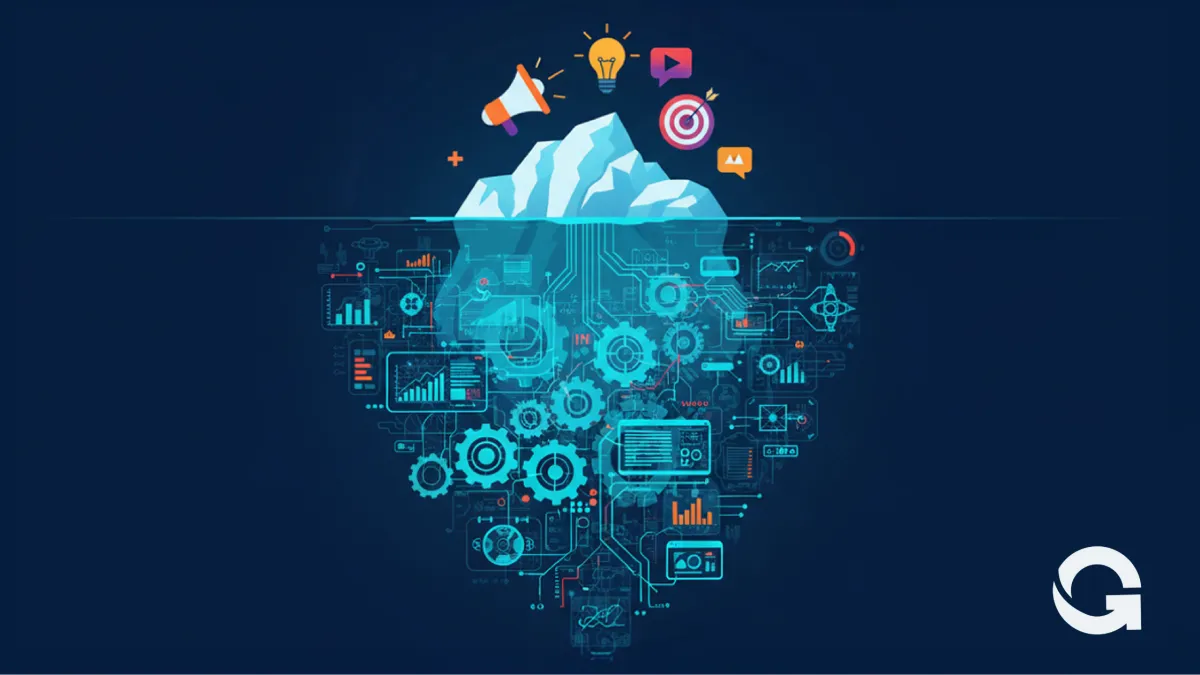
But here's what I've learned after 30+ years of building and scaling businesses: while everyone's fighting over the same AI marketing tools, the real leverage is hiding in your operations.
Think about it. Every founder at every conference is talking about their AI marketing stack. It's table stakes now — as basic as having a website. Your competitors are using the same tools, reading the same "10 Best AI Prompts" articles, generating similar content. Where's your edge?
I'll tell you where it is. The founders who are quietly pulling ahead — the ones I work with — aren't the ones with better prompts. They're the ones using AI to fix their inventory forecasting, automate their financial reporting, and build systems that run without them. They're turning operational chaos into predictable, scalable machines.
Look, I've been around this block since the '90s. Back in 1996, my friend Dr Nectar (he finally got his PhD in Machine Learning & AI) showed me the early World Wide Web in his tiny cubicle at the UTS engineering lab. Video was grainy, barely moving — but it was alive! I was unimpressed then, just like I was unimpressed with early AI and machine learning during my Electrical and Computer Systems Engineering studies. But here's what I learned: these "unimpressive" technologies can explode into world-changers faster than you think. The web went from barely functioning to everywhere in just a few years. AI is doing the same thing now.
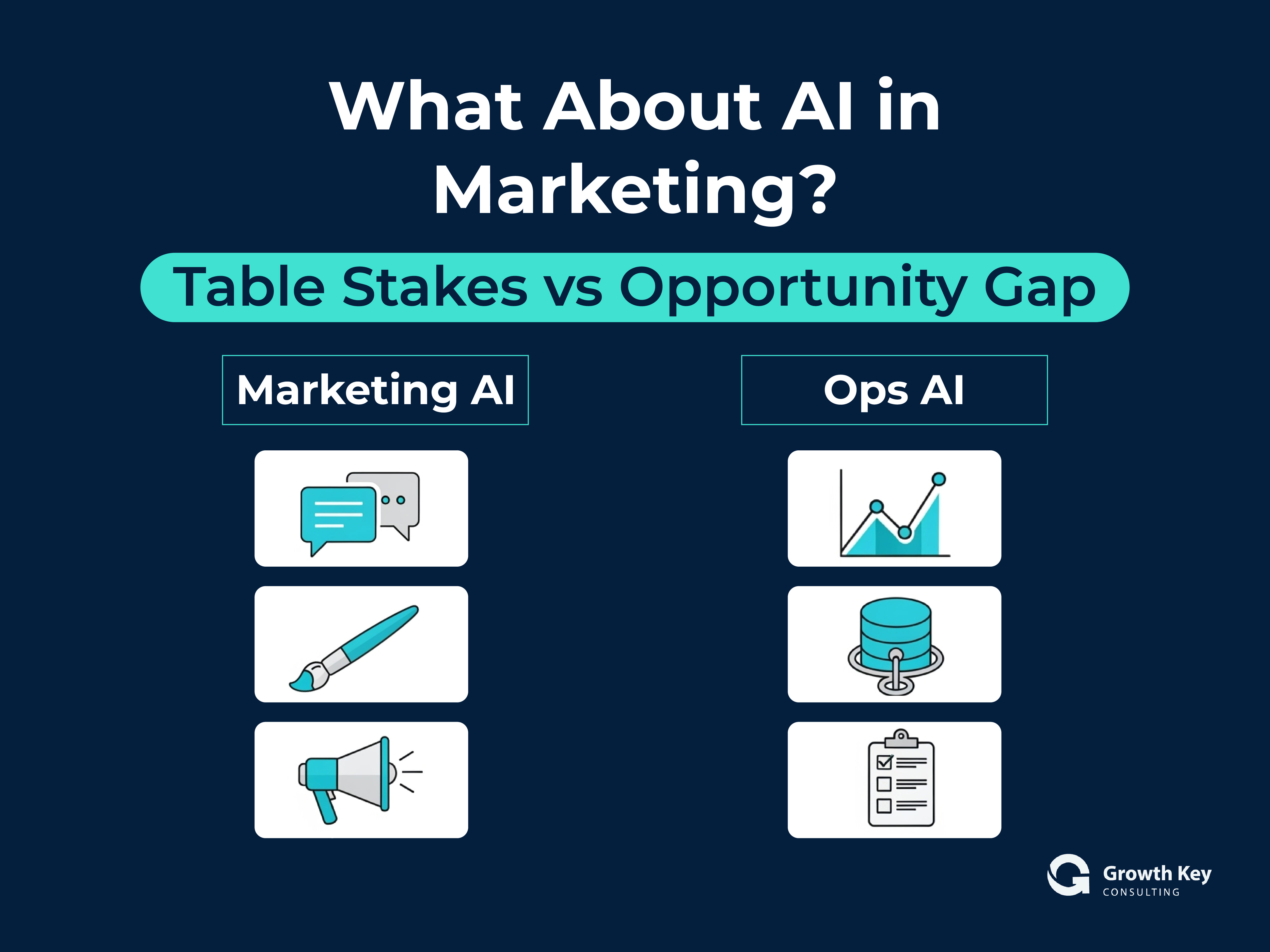
Marketing AI might save you an hour on content creation. Operational AI saves you from stockouts that cost tens of thousands. Marketing AI helps you write better ads. Operational AI helps you sleep at night knowing your business won't implode if you take a vacation.
Smart money isn't chasing prompts. It's building systems.
Why AI & Automation Matter for SMEs
Let me cut through the noise and share what operational AI actually delivers for growing businesses — especially in beauty, health and eCommerce generally, where I've spent most of my career watching margins get tight and complexity scale faster than headcount.
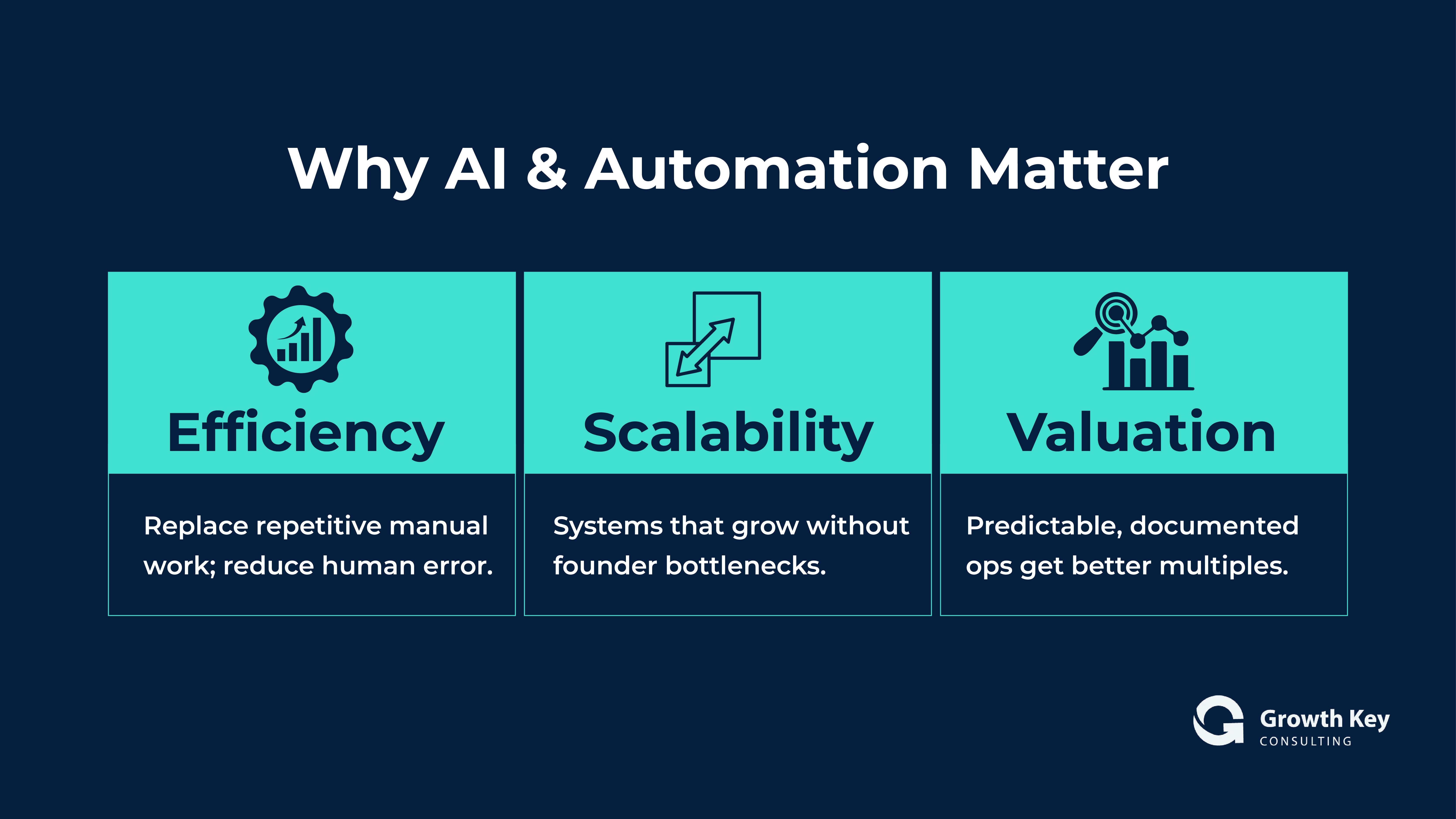
Efficiency isn't just about speed. It's about eliminating the compound effect of human error. I've seen this countless times: that inventory miscount leads to a stockout, which triggers express shipping costs, which destroys your margin on an entire product line, which frustrates customers who then need placating with discounts. One manual mistake cascades into thousands in losses. AI doesn't have bad days or transpose numbers.
Scalability becomes real, not theoretical. Your business can finally grow without you personally touching every decision. When your replenishment runs on AI-driven forecasting instead of "Sarah checks the spreadsheet every Monday," you can double sales without doubling chaos. I've built this for dozens of brands — your team gains independence, decisions happen without bottlenecks.
Investors see predictability, not prayers. I've sat in hundreds of investor meetings. Walk in with automated dashboards, systematised operations, and AI-driven forecasting, and watch their posture change. They're not investing in your ability to grind harder — trust me, I learned that the hard way. They're investing in systems that compound. Automated operations signal that your business is built to scale, not just survive.
In beauty, wellness and eCommerce specifically, operational AI touches everything that actually matters: inventory triggers that prevent stockouts, compliance automation that keeps you retail-ready, QA reporting that catches issues before customers do, and financial dashboards that show you problems while you can still fix them.
This isn't futuristic. It's happening now, in businesses just like yours. I'm implementing it every week.
What About AI in Marketing?
Yes, Marketing AI Has Its Place
Look, I'm not saying marketing AI is worthless. It's not.
In fact, let me be clear: you should absolutely start with the automation that's already in your existing software — even in marketing. But here's the thing most people miss: the best marketing automation isn't about copy generation. Take Klaviyo, for example. Setting up proper flows — knowing who to send what and when — that's worth infinitely more than improving your email copy by 15-20%. The copy is the easy part.
I use GoHighLevel for my consulting business. It handles workflows for both creative and operational tasks. I don't need ManyChat to auto-respond to campaign comments — GHL does it natively if you know how to set it up properly. Even Shopify has built-in automation capabilities that most founders never explore.
But that's precisely my point. Everyone's obsessed with the generative AI for content, while the real blind spot — the place where 90% of founders haven't even started looking — is operations. While you're tweaking prompts to get slightly better Instagram captions, your competitors might be building AI systems that predict demand spikes, automate reordering, flag margin erosion, and generate investor-ready reports in seconds.
Marketing AI helps you compete. Operational AI helps you win.
Here's where AI actually drives enterprise value.
Hype vs. Practical Wins
Every software vendor is suddenly an "AI company." Every consultant has become an "AI strategist." The noise is deafening. So let me separate the expensive distractions from the actual money-makers — based on what I've actually seen work.
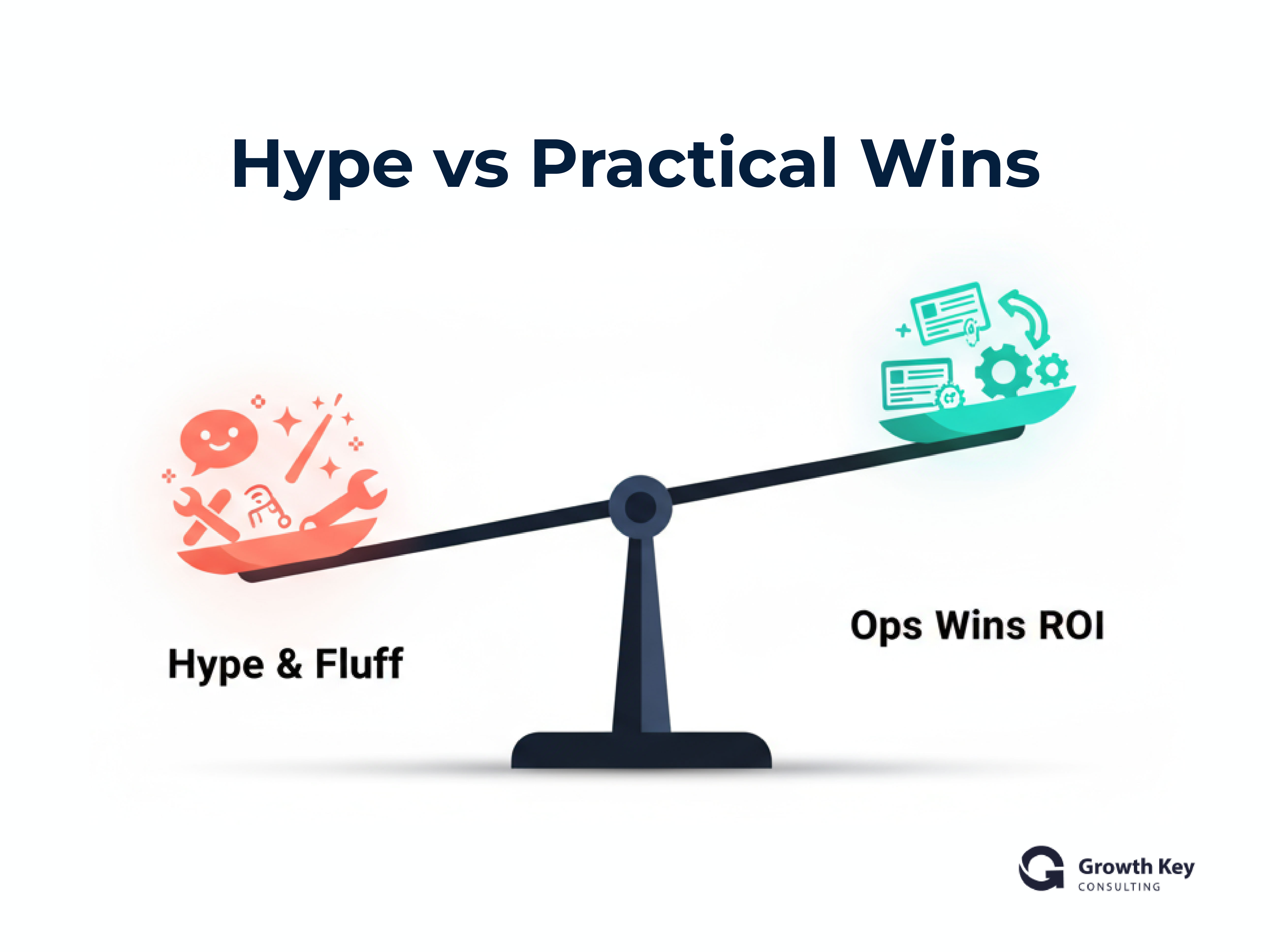
The Hype Machine promises revolutionary chatbots that'll replace your customer service team (they won't), magical tools that'll 10x your revenue with better prompts (please), and shiny dashboards that look impressive in demos but break with real data. These are the tools that get founders excited in webinars and disappointed in implementation. I've watched this movie before.
The Practical Wins are unsexy and transformative. A Zapier workflow that automatically reconciles your Shopify sales with Xero accounting, saving 5 hours weekly. AI-driven demand planning that reads seasonal patterns better than your gut instinct ever could. Automated alerts when promotional pricing threatens to push margins below profitability. A simple script that monitors customer reviews for quality issues before they become PR disasters.
One beauty brand I worked with was losing entire days to manual reporting. Three team members spending every Monday morning copying data between systems, building reports, checking for errors. We built them an automated dashboard that pulls from seven different sources and delivers a single truth every morning at 7am. Time saved? 15 hours per week. Errors eliminated? All of them. Cost to implement? Less than one month of the wages they were burning on manual work.
The wins aren't in the revolutionary. They're in the repetitive. Every manual process you automate compounds. Every decision you systematise scales. Every report you automate becomes consistent.
Real ROI comes from fixing the boring stuff that's slowly killing your business. I learned this the hard way running my own brands.
Where to Start (Biggest ROI Areas)
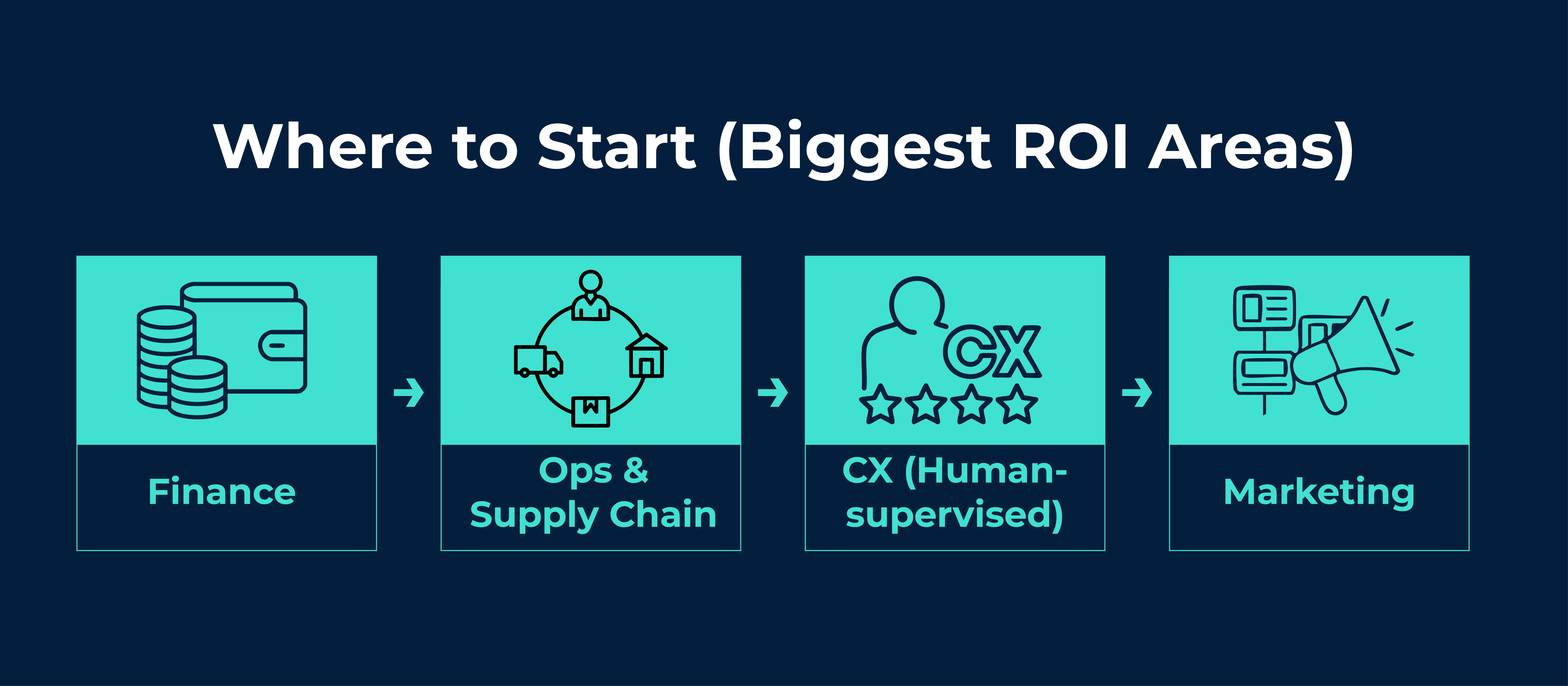
You can't automate everything at once. You shouldn't try. Here's the order that actually works, based on what I've seen move the needle fastest across hundreds of implementations:
Start with Finance. This is where errors hurt most and automation helps fastest. Automated invoice processing, cash flow forecasting, margin monitoring, and reconciliation. Get your numbers clean and real-time. Nothing else matters if you don't know whether you're making money. I learned this lesson at a cost of $15 million during the Pan Pharmaceuticals recall.
Then hit Operations & Supply Chain. Demand forecasting, reorder points, inventory tracking across locations, and fulfillment optimization. This is where AI prevents the expensive mistakes — stockouts, overstock, shipping chaos. One good forecasting model can save six figures annually.
But here's my advice: start with what you already have. Explore your existing platforms first. Don't immediately chase new tools and get frustrated with poor results. That's a recipe for giving up and failing.
Customer Service comes third — but carefully. AI assists, humans decide. Automated ticket routing, suggested responses, and FAQ handling can cut response times in half. But keep humans in the loop for anything that touches brand perception.
Marketing is last. Yes, last. But when you do tackle it, focus on process automation, not just content generation. Set up those email flows properly. Use the automation features already in your platforms. The incremental gains from better marketing AI pale compared to fixing operational foundations.
Rule of thumb: Start where tasks are repetitive, rules-based, and high-frequency. If someone's doing the same thing every day or week, that's your automation target.
Case Example: How Automation Saved $40K/Year
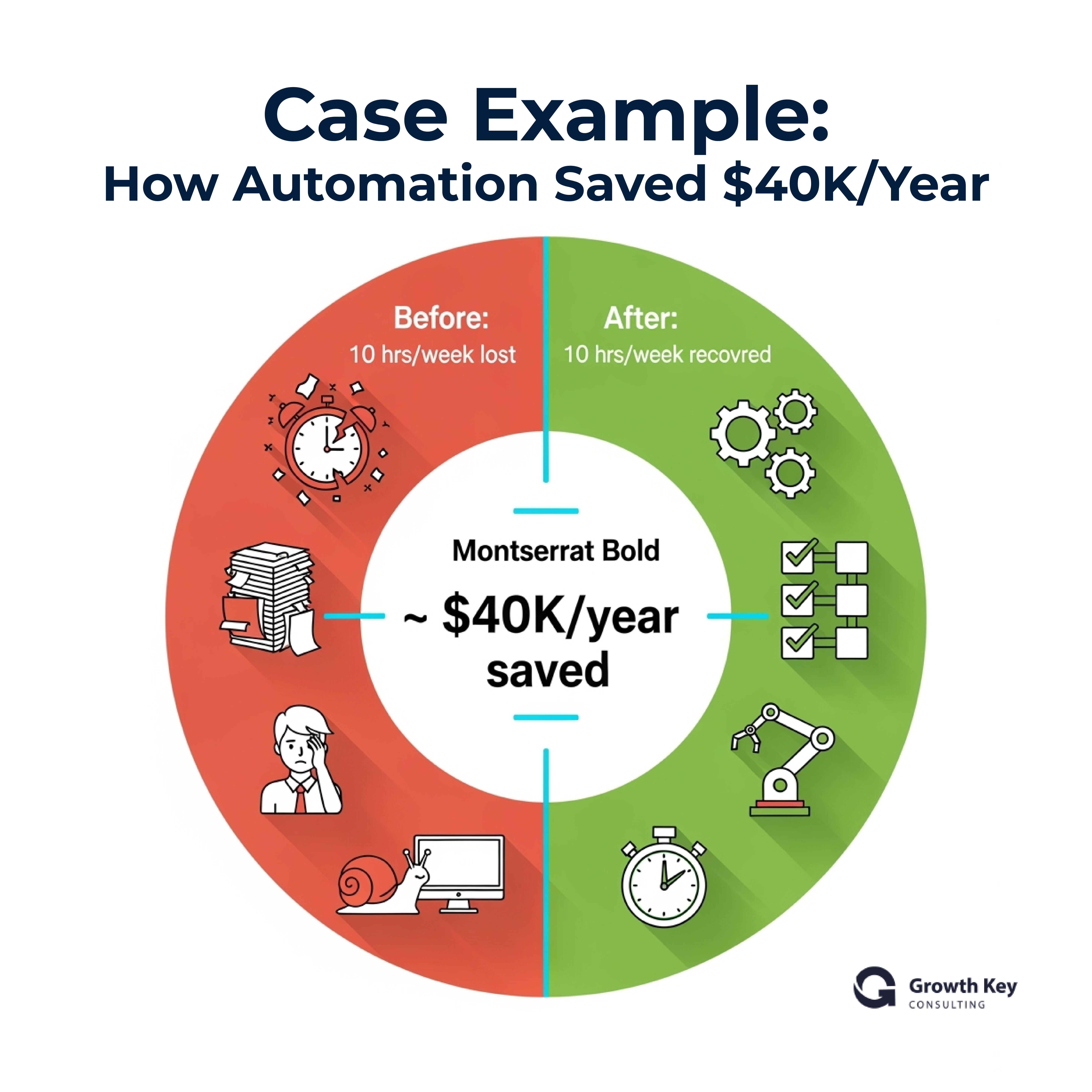
This case study was an almost identical situation to one of my old brands, Skin Physics. It's actually a client I can't reveal due to NDA, but the parallels are uncanny — same challenges, same solutions, same transformative results.
Here's what operational automation actually looks like in practice — not theory, but real implementation from my files.
A beauty brand with $8M revenue was drowning in manual reporting. Their ops manager spent 10 hours every week pulling data from Shopify, their 3PL, Xero, and various spreadsheets to create a weekly dashboard. The finance lead spent another 5 hours on inventory reconciliation. Sales spent 3 hours on commission calculations.
We mapped their entire data flow and built a simple integration: Shopify → Zapier → Google Sheets → Xero, with automated triggers for inventory levels and financial thresholds. Nothing fancy. No complex AI models or machine learning. Just smart connections between existing tools.
The result? 10 hours per week recovered instantly. That's 520 hours annually — equivalent to $40,000 in salary costs. But the real value wasn't the time saved. It was what they did with that time. The ops manager moved from reporting to optimization. Finance started forecasting instead of just recording. Sales focused on selling instead of calculating.
Clean data, delivered automatically, transformed their decision-making speed. Issues that used to hide for weeks got flagged in hours.
I've been implementing systems like this since the late '90s, long before "AI" became a buzzword. Back when I was studying engineering at UTS, we called it machine learning or automation. I was intrigued but unimpressed with early machine learning then — saw it would be amazing someday but had a long way to go. The journey was slow — it took more than 20 years for ChatGPT to emerge. But when change comes, it comes fast. We must always be ready to adopt positive change, even when it's difficult at first.
Case Study: K Republic — Forecasting Accuracy & Supply Chain Sync
One of my clients, K Republic was scaling fast. DRTV campaigns, online sales, three countries, multiple warehouses. Classic success problem that I've seen destroy many brands: growth was outpacing their systems.
Their Shopify Markets setup couldn't handle the complexity. UK warehouse would be drowning in inventory while Australian customers saw "out of stock" messages. US fulfillment was shipping products they didn't actually have. Every mistake meant refunds, replacements, and furious customers.
The surface-level fix would have been better inventory software. But that's not the real problem — and this is where my experience pays off. The real problem was decision-making speed. By the time they knew about a stockout, it was too late.
We built them a forecasting and replenishment model that actually worked. Real-time sales data from all channels. Warehouse levels updated hourly. AI-driven logic that understood the difference between a normal Tuesday and a TV campaign spike. The system learned that UK customers buy differently than Australians, that certain SKUs always sell together, that promotional velocity varies by market.
Within three weeks, stock-outs dropped 70%. Refund rates halved. But here's what really mattered: the team trusted their numbers for the first time. No more gut-feel ordering. No more panic transfers between warehouses. The same model now drives their board reports and expansion planning.
K Republic's founder Belinda, told me last month: "I finally sleep through the night. The system runs whether I'm watching or not."
That's the difference between marketing AI and operational AI. One makes your ads better. The other makes your business bulletproof.
Micro-Cases: Real-World AI in Action
Review Sentiment Early-Warning System (Customer Experience QA)
One of my more recent beauty brands LIPMD was getting blindsided by quality issues in 2021. By the time we noticed review complaints, hundreds of units were already shipped and the damage was spreading across social media.
We setup an automation workflow to scan reviews and support tickets for sentiment shifts. Not just star ratings — actual language patterns that signal problems. "Leaking," "different texture," "rash," "not like before." The system flags unusual complaint clusters before they become crises.
A few months later, we caught a packaging issue with the hero lip plumping serum two weeks faster than human monitoring would have. We pulled inventory, fixed the seal problem, and avoided what would have been a 40% refund rate on our best-seller.
Not flashy. But it saved us from a potential brand crisis. That's operational AI — quiet, constant protection. The kind of thing I wish I'd had during my product recalls more than a decadeearlier.
Dynamic Promotion Guardrails (Financial Discipline)
A growing device led beauty eCommerce brand kept wondering why revenue grew but profits didn't. The answer was hiding in their promotional strategy — or lack thereof. I see this all the time.
We built a lightweight AI script that monitors SKU-level margins in real-time. Factor in the discount, the shipping cost, the platform fees, and the actual COGS. If any combination pushes margin below threshold, it fires a Slack alert before the campaign launches.
First month: they discovered 30% of their "successful" promotions were actually losing money after shipping. Within six weeks, margin variance dropped by 15%. The founder calls it "the cheapest CFO we've ever hired."
Human + AI = Best Results
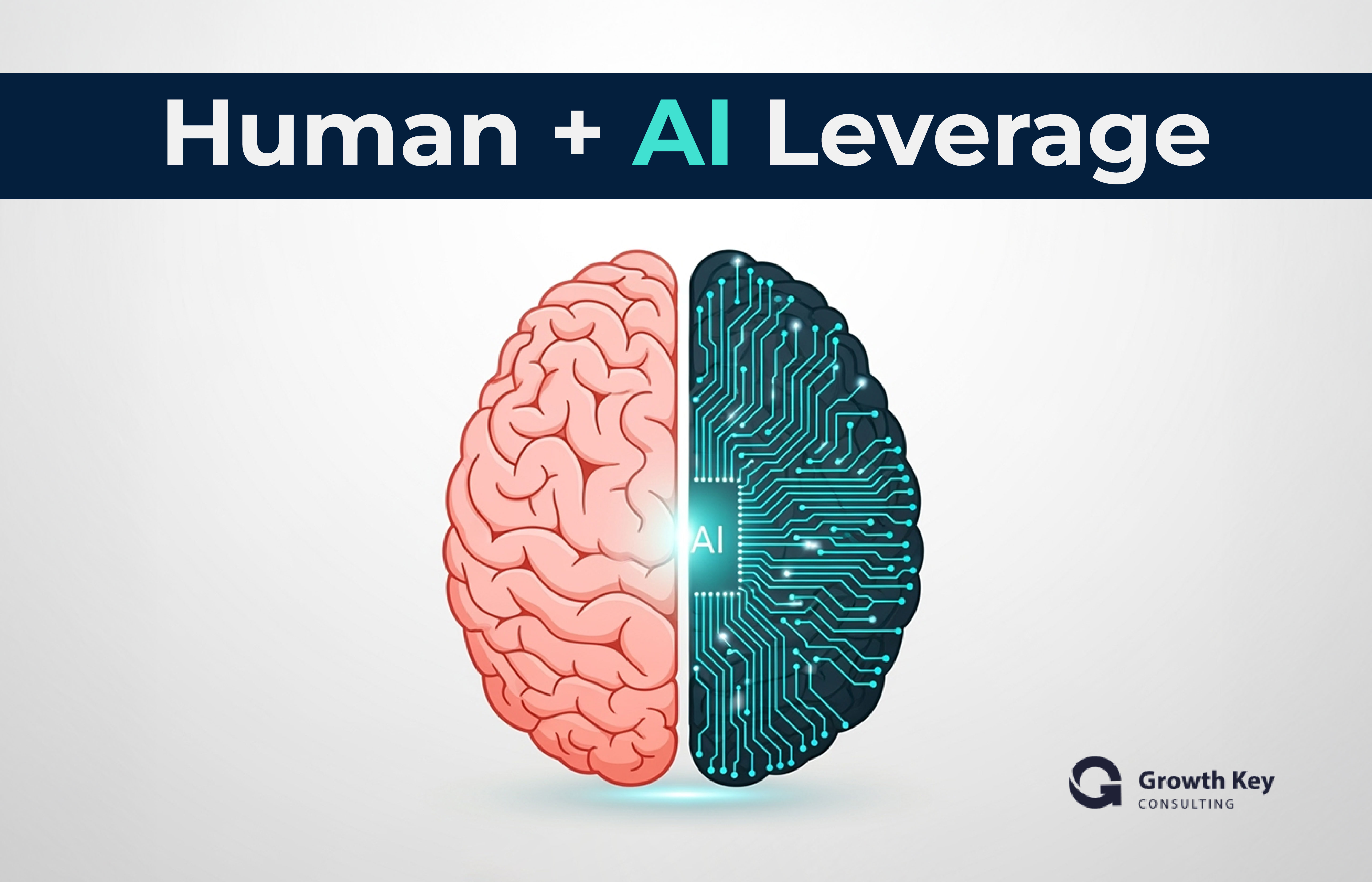
Let me kill the fear-mongering right now: AI isn't replacing your team. It's upgrading them.
But here's the crucial point so many miss: AI should be a catalyst (or a turbo charge), not a crutch. You still need to know your core skills. Don't use AI to mask incompetence — use it to amplify competence.
Your inventory manager stops being a data entry clerk and starts being a strategic planner. Your finance lead stops building reports and starts finding opportunities. Your customer service team stops copy-pasting responses and starts actually solving problems.
AI handles the robotic work. Humans do the human work. It's that simple.
The businesses winning with AI — and I work with many of them — aren't the ones trying to eliminate headcount. They're the ones redeploying talent to higher-value work. That junior analyst who spent days on spreadsheets? They're now modelling scenarios and spotting trends the AI surfaces. The operations manager buried in daily firefighting? They're now thinking three months ahead instead of three hours.
For founders, this is the real transformation. You evolve from operator to strategist. Instead of checking inventory levels at midnight (guilty as charged in my early days), you're planning market expansion. Instead of approving every discount, you're building partnerships.
Your business runs even when you're not in the room. That's the only exit strategy that works — I've done it multiple times.
Risks & Pitfalls
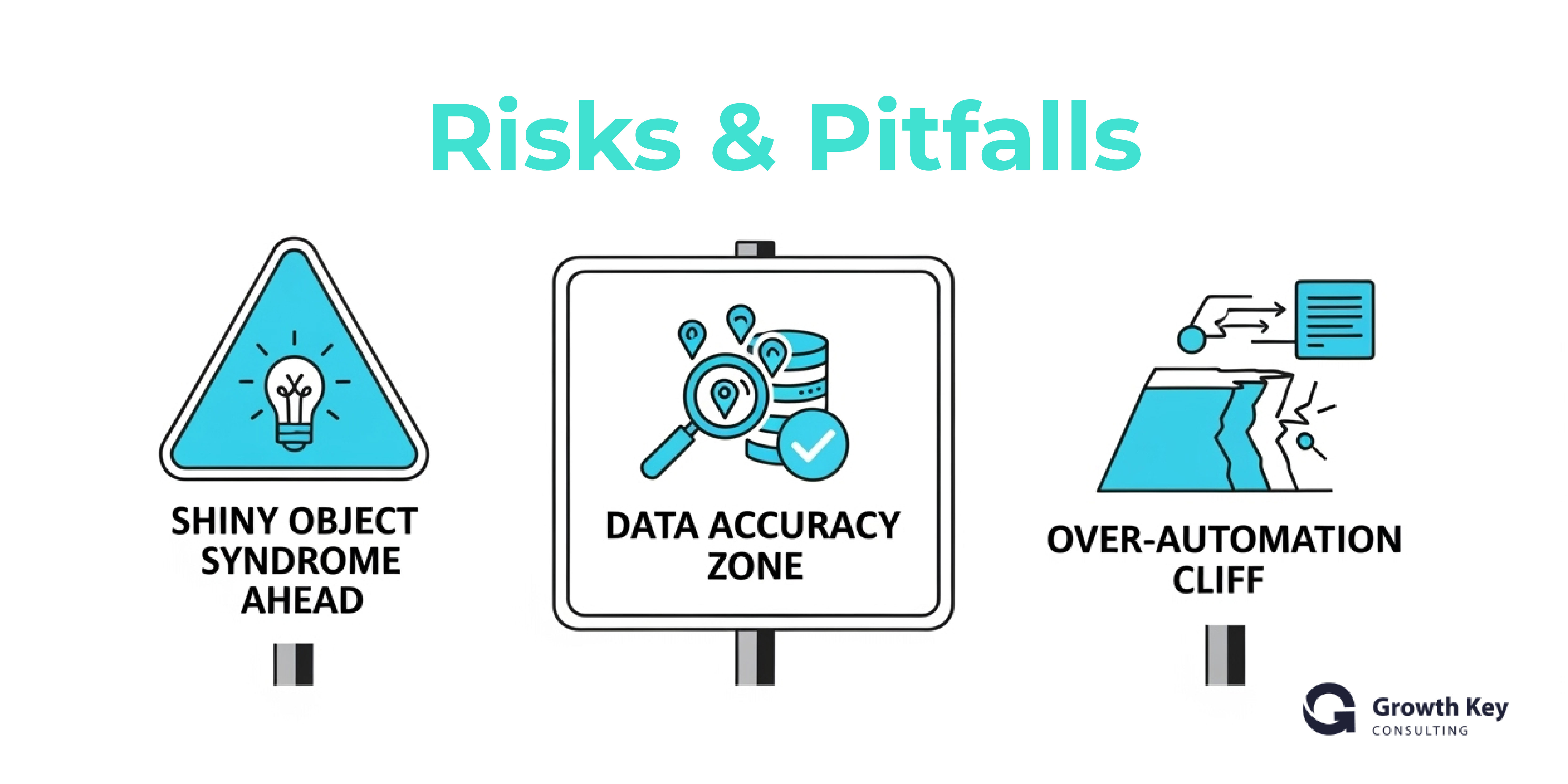
Automation can go wrong. Let's be honest about where — I've seen all these mistakes firsthand.
Over-automating customer touchpoints is the fastest way to damage your brand. That chatbot that sounds like a robot? Customers hate it. Automated responses to genuine complaints? Brand suicide. Keep humans in charge of anything that affects perception.
Shiny object syndrome will drain your bank account. Every tool promises transformation. Most deliver complexity. Start simple. Prove ROI. Then expand. Don't buy the enterprise solution when a Zapier workflow would work. Use what you have first — even GoHighLevel or Shopify's built-in features can do more than most founders realize.
Data accuracy matters more than sophistication. An AI model running on bad data is worse than no AI at all. Clean your data first. Automate second. Otherwise you're just making mistakes faster.
Team resistance is real. Your staff might think AI means redundancy. Address it head-on. Show them how automation upgrades their roles, doesn't eliminate them. The businesses that succeed with AI are the ones that bring their teams along for the journey.
Solution: Start with pilots. Measure everything. Scale what works. Kill what doesn't. And always keep a human in the loop for anything customer-facing or compliance-critical.
Future-Proofing Your AI Stack
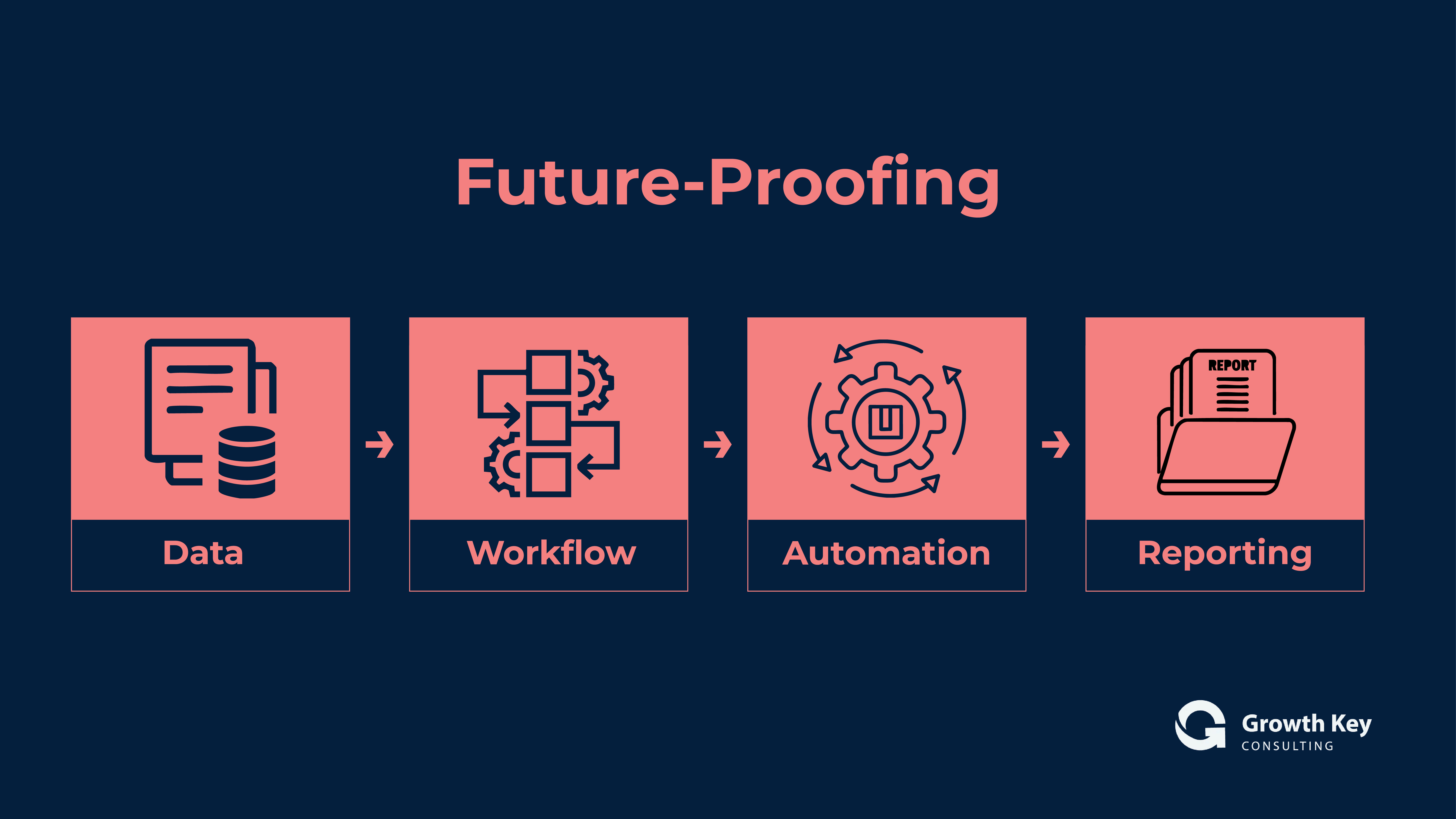
The tools will change. The principles won't.
Build with modular, open-API tools that talk to each other. Avoid anything that locks you into a single ecosystem. Today's revolutionary platform is tomorrow's technical debt — I've migrated enough businesses to know this pain intimately.
Think workflows, not features. The tool that does one thing brilliantly beats the platform that does everything poorly. Your stack should be Lego blocks, not a monolith.
Expect rapid evolution. The AI tool you implement today might be obsolete in 18 months. That's fine if you've built for flexibility. Your workflows matter more than your tools.
Investors love adaptable systems. They show you're thinking beyond the current quarter. A business built on flexible, scalable operations can pivot, expand, or exit. A business built on rigid tools can only pray nothing changes.
Remember: we must always be ready to adopt positive change, even when it's difficult at first. The same skepticism I had about the early web and AI in the '90s could have held me back — but staying open to evolution is what's kept me ahead for three decades.
Agentic AI in Sales & Service (Visionary Outlook)
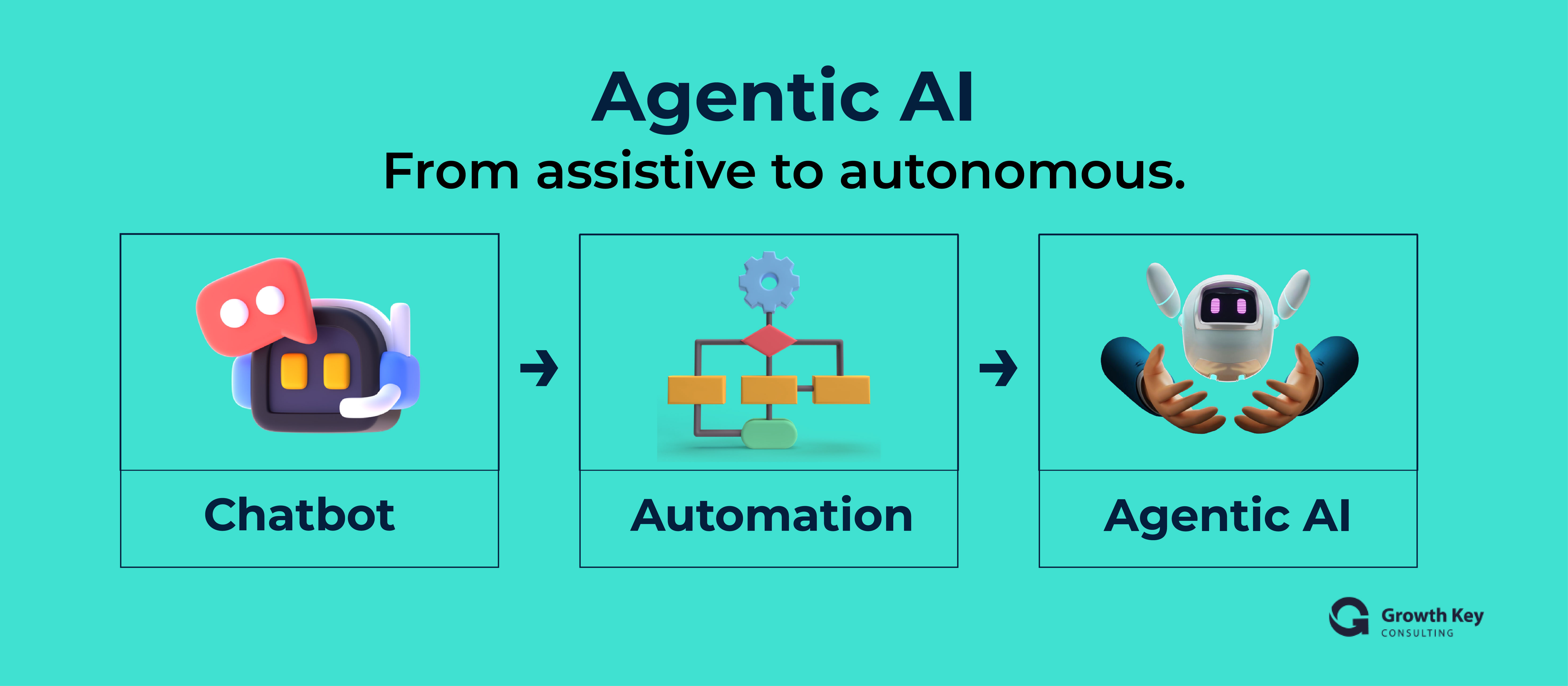
Here's where things get interesting — and most founders aren't even aware it's coming. But I've been tracking this evolution since my engineering days.
Agentic AI doesn't just respond. It acts. It's the difference between a calculator and an accountant, between spell-check and a copywriter.
Level 1 (happening now): AI assists your team. Suggests responses, surfaces knowledge, flags issues. Human reviews and decides. This is where most businesses are today, if they're using AI at all. Start here with your existing tools — Klaviyo's AI features, Shopify's automation, whatever you already have.
Level 2 (emerging fast): Semi-autonomous AI handles routine tasks independently. Password resets, order tracking, basic refunds. Humans handle exceptions. Your customer service team shrinks by 50% while response quality improves. I'm implementing this for several clients right now.
Level 3 (3-5 years out): Fully agentic AI runs entire workflows. Inbound: AI handles complete service conversations, only escalating true edge cases. Outbound: AI qualifies leads, books appointments, even handles initial sales conversations. Not templates or scripts — actual conversations that adapt and respond naturally.
Why does this matter for your business today? Because the infrastructure you build now determines whether you can leverage agentic AI when it arrives. The businesses preparing for Level 3 while operating at Level 1 will have an insurmountable advantage.
Imagine a "digital salesforce" that can handle thousands of simultaneous conversations, never sleeps, never forgets a follow-up, and maintains perfect brand consistency. That's not science fiction. It's being tested right now by companies you compete with.
Lower customer acquisition costs. Higher lead qualification rates. Infinite scaling without hiring. This is where operational AI is heading, and Growth Key is already preparing our clients to capture that leverage.
In 3-5 years, agentic AI won't be experimental. It'll be expected. The question is: will you be ready to deploy it, or still trying to figure out basic automation?
The AI in Ops Playbook
Theory is nice. Implementation wins. That's why I've created the AI in Ops Playbook — your practical guide to building operational leverage.
Inside, you'll find workflow templates that actually work, tools ranked by real ROI (not marketing hype), integration guides that assume you're not technical, and case studies with actual numbers from my three decades of implementation.
This isn't a static PDF that'll be outdated in six months. We update it as new tools prove themselves and old ones fail. Consider it your living reference for operational transformation.
The playbook includes our complete audit framework — the same process we use with clients to identify their highest-ROI automation opportunities. Run this audit, and you'll know exactly where to start.
Download it free. No webinar pitch. No sales sequence. Just practical tools you can implement this week.
Closing: Build Proof, Not Hype
AI isn't about chasing trends. It's about building leverage.
Every manual process you automate compounds. Every system you build scales. Every hour you recover multiplies. I've learned this through building, scaling, and exiting multiple 8-figure businesses. Smart founders understand this. They're not waiting for the perfect AI tool or the revolutionary platform. They're building operational advantage one automation at a time.
Start small. Pick one painful, repetitive process. Automate it. Measure the impact. Then move to the next. In six months, you'll have recovered dozens of hours weekly. In a year, you'll have built a business that runs without you — I've done it multiple times, and it never gets old.
That's what investors buy. That's what acquirers value. That's what gives you your life back.
The choice is simple: Keep tweaking marketing prompts while your operations slowly strangle growth. Or build systems that scale.
Think of AI as your rocket booster, not your crutch. Know your fundamentals, then use AI to amplify them. That's how you build something real.
Download the AI in Ops Playbook. Or reach out directly — I'll help you map your automation roadmap based on what's actually worked across hundreds of implementations.
Because at the end of the day, AI doesn't replace your people — it amplifies what's already great about your business.
The smart money knows this. Now you do too.
And trust me, from someone who's seen technologies go from "unimpressive" to "world-changing" — we're just getting started.
Alex Sisiolas is the founder of Growth Key Consulting, helping beauty and wellness SMEs build scalable operational systems. With 30+ years building and exiting multiple 8-figure brands including Skin Doctors, Skin Physics, and Bodytrim, Alex specializes in implementing AI-driven automation that transforms chaotic operations into predictable, sellable businesses.
Ready to build operational leverage in your beauty brand? Download the AI in Ops Playbook or connect with me on LinkedIn to discuss your automation roadmap.

